Backgammon NJ for Android
- 4.0
- Rating
- 10.00K
- Installs
- $7.99
- Price

 Analysis by App-foxy
I approached Backgammon NJ as someone returning to backgammon after a long break, not as a tournament expert. That turned out to be the right way to experience it. This is a paid board game from developer Jimmy Hu, built around the classic race-and-capture game rather than flashy presentation or a large collection of unrelated modes. Its main appeal is simple: it gives you a serious place to learn, practise, and test decisions at a pace that can suit a complete beginner or a highly experienced player.
The Android version is listed at $7.99, with an Everyone age rating, and it has been available since November 13, 2011. Those details help explain what kind of purchase this is. You are not downloading a casual time-killer and hoping it becomes useful later; you are paying for a focused backgammon tool. I found that distinction important because the game makes the most sense for someone who genuinely wants to improve or play regularly.
Getting comfortable with the board before chasing wins
The first thing I would tell a new player is not to judge the game by the opening roll. Backgammon can look straightforward because the board is visually clear, but every move asks you to balance speed, safety, blocking, and the possibility of being sent back. A legal move is not automatically a good move, and a move that seems aggressive can create a problem several turns later.
You May Also Like

 Pandora - Music & Podcasts
Pandora’s Music Is Easy to Start, but Harder to Recover
Pandora’s strength is its low-effort path from a seed to a station. Its weak spot is how much confidence it asks you to place in connection, setup, and quiet recovery.

 8 Ball Pool
 Is Built on Rivalries, Rematches, and Routine
A close look at the rivalries, rematches, shared routines, and unanswered safety questions that turn a quick pool match into a persistent mobile community.

 Samsung Music
’s Quiet Strength Is Playing What You Already Own
Its reach comes less from spectacle than from dependable access to a personal library. That simplicity is both the app’s strongest retention engine and its ceiling.

 AccuWeather: Weather Radar
AccuWeather Review: A Quick, Clear Forecast for Everyday Decisions
For everyday plans, the best forecast is the one you can understand quickly. AccuWeather makes rain timing, radar, and local conditions easy to act on, with a few trade-offs.

 Hill Climb Racing
Why Hill Climb Racing Still Turns Crashes Into One More Run
A tiny car, a bumpy hill and one more upgrade: Hill Climb Racing keeps resurfacing because its simple chaos makes every near-miss feel personal.

 AliExpress - Shopping App
AliExpress Makes Global Shopping Feel Personal, but Shoppers Bear the Risk
AliExpress turns a global marketplace into a pocket-sized discovery engine. Its reach is useful, its shopping loop compelling, and its trade-offs easy to miss.
More From Our News Desk
View All News


The game’s stated range runs from beginner skill levels to world-class play. For a first-time user, that range matters more than the promise of a quick match. I would begin at the easiest setting and treat the opening games as lessons in board reading. Watch how a safe position differs from a merely fast one, and notice when spreading checkers creates useful options instead of leaving isolated pieces exposed.
My first meaningful success would not be winning immediately. It would be completing a game while understanding why I made most of my moves. That is a much better early target, particularly when dice create awkward choices. If you are new, keep the board visible and pause mentally before moving: identify vulnerable checkers, look for points you can safely occupy, and only then decide whether advancing is worth the risk.
A practical first-session routine
For a first session, I recommend three short stages. Start with a low-pressure game against the easiest opponent available. Next, replay the same kind of opening while deliberately checking every legal use of the roll instead of selecting the first move that looks attractive. Finally, play one more game without trying to rush the bear-off stage. This routine turns the app from a digital board into a small practice laboratory.
That last stage is especially useful because beginners often focus almost entirely on the opening. In reality, the end of a backgammon game has its own rhythm. Once checkers are close to home, a player must decide whether to preserve a balanced arrangement or accept a less tidy position to finish sooner. Learning to count the remaining distance and to avoid unnecessary exposure will make your first victories feel earned rather than lucky.
I also found that the game is easier to appreciate when I play in focused bursts. A quick session before a commute or during a break can be enjoyable, but improvement comes from reviewing decisions afterward. Ask yourself which checker became trapped, which move gave the opponent an easy hit, and whether you had a safer alternative. Even without turning the experience into formal study, this habit makes each match more informative.
What the paid download changes
The price places Backgammon NJ in a different position from the many free board-game apps that rely on ads, broad casual appeal, or a large menu of familiar games. Here, the value depends on how often you will actually play backgammon. If you only want an occasional digital roll of the dice, a free alternative may be easier to justify. If you want a dedicated opponent and a structured way to practise, the purchase feels more reasonable.
There are also in-app purchases priced at $2.99 per item. That means the initial payment is not the only possible spending consideration. I would look at the available purchase options before committing to a long-term routine, especially if your goal is to keep the experience simple and self-contained. The important question is not whether extra purchases exist in isolation, but whether the core game already matches what you want to do.
With an average rating of 4.0 from around 2.3 thousand ratings, the reception suggests a generally positive but not universally perfect experience. I read that as a reason to keep expectations practical. This is a specialised board-game app with a long history, not a modern social platform designed to impress everyone during the first minute.
From installation to the first useful game
After installing it on a compatible Android device, I would avoid changing several things at once. Begin by selecting the most approachable skill level and start a normal game. The goal is to learn the flow: roll, choose a legal movement, watch the resulting position, and continue until the board reaches the bear-off phase. A beginner can easily become distracted by the desire to find the perfect move before understanding the basic consequences.
During the first few turns, concentrate on three questions. Can I make a point that limits the opponent’s movement? Is one of my checkers sitting where it can be hit without compensation? If I move this checker, am I creating a better position or merely making progress on the board? These questions are more useful than memorising opening rules immediately, and they work well when playing against a digital opponent.
One concrete everyday scenario is a short evening practice session. I might play one game after dinner, then stop instead of starting another automatically. I would note the first position that confused me and use the next session to watch for it. This approach prevents the common beginner trap of playing many games while repeating the same mistake. The app becomes more valuable when each match has a small purpose.
Another useful workflow is to use easier games for experimentation and stronger games for discipline. At the lower end, I can test whether building a block is worth surrendering a little racing speed. At a higher level, I need to respect the consequences of loose moves and think more carefully about future rolls. Moving upward too quickly can make the game feel unfair, while staying at the easiest level forever can hide weaknesses.
How to recognise a real first success
A first win is satisfying, but I would measure progress in more specific ways. Did you avoid leaving a single checker exposed when there was a safer legal move? Did you create a point that made the opponent’s next turn awkward? Did you reach the bear-off stage without panicking when the dice did not cooperate? These are signs that you are learning the board rather than merely benefiting from favourable rolls.
Backgammon always contains chance, so a loss does not automatically mean poor play. I try to separate the result from the decision. A sensible move can still be punished by the next roll, just as a questionable move can survive by luck. That distinction is one of the strongest reasons to use a dedicated practice game: repeated positions gradually show which choices are robust and which only look good when the dice are kind.
For a new player, I would also keep the first games free from unnecessary pressure. Do not compare your early results with world-class play, even though the game supports a wide skill range. The useful comparison is between your current decisions and your earlier ones. When you start seeing danger before it appears, the app is already doing more for you than a simple random board generator.
Confusions that can slow down beginners
The biggest source of confusion is usually not the interface but the rules. A roll can offer several legal combinations, and the best choice is often not the move that uses the most obvious die first. New players may also underestimate the importance of occupying points and overestimate the value of sending one opposing checker backward. A hit can feel exciting while still leaving your own position dangerously open.
Another common misunderstanding concerns speed. Advancing every available checker can create a scattered position that is difficult to defend. Sometimes the right move is to improve the structure of your board rather than to move the furthest checker. I found it helpful to pause after each roll and compare a fast move with a consolidating move. That small habit makes the strategic layer visible.
The bear-off can cause a different kind of uncertainty. Players often assume that reaching home means the difficult part is over, but poor distribution can waste rolls or leave a checker awkwardly placed. Before bearing off, look at the whole home board and consider whether moving a different checker will give you more useful options later. This is a subtle lesson, but it is one of the clearest ways to move beyond beginner play.
You may also wonder whether the game is suitable for children because it carries an Everyone rating. The age label makes it broadly accessible, but backgammon still requires patience, counting, and an interest in turn-based strategy. I would happily introduce it to a child who enjoys board games, while recognising that a younger player may need someone to explain hits, blocked points, and the difference between a legal move and a sensible one.
Where it fits beside other backgammon choices
Compared with playing on a physical board, the app is more convenient for solo practice. There is no need to find an opponent, set up pieces, or remember whose turn it is. That convenience is its clearest everyday advantage. A physical board remains better when conversation and face-to-face play are the priority, especially for families or friends who enjoy the social ritual as much as the strategy.
Compared with a broad collection of mobile board games, this title is narrower but more purposeful. You are not opening it for a quick change of genre; you are opening it because you want backgammon. That focus will appeal to a returning player, but it may feel limiting to someone who expects puzzles, card games, online community features, or constant novelty from one purchase.
Free alternatives can be preferable when cost is the main concern or when you want to sample the rules before paying. They may also suit players who prefer a more modern presentation or a stronger emphasis on social competition. I would choose this game instead when reliable solo practice and a range that can accommodate serious improvement matter more than a large feature catalogue.
The current version is 4.8, and the minimum operating-system requirement is Android 7.1. In practical terms, that makes checking device compatibility an important step before purchase, particularly if you are using an older phone or tablet. I would rather confirm that early than discover that a dedicated game does not fit the device I planned to use for regular practice.
Who will enjoy it, and who should pass
I think it is a strong match for a first-time player who wants to learn at a calm pace, a former player rebuilding confidence, or an experienced enthusiast who wants a focused digital board. It also suits people who prefer deliberate games over reflex-based entertainment. The broad difficulty range gives a beginner somewhere to start without making the app irrelevant after the basic rules become familiar.
I would be more cautious about recommending it to someone seeking a free, highly social experience. The upfront price and possible additional purchases make it less attractive if you only play once every few months. It is also not the right choice if your main interest is a collection of different board games. In those cases, a general board-game app or a physical set may offer better value.
Players who dislike losing to dice may need patience as well. No digital opponent can remove the uncertainty that defines backgammon. The app can help you make stronger decisions, but it cannot guarantee that careful play wins every individual game. Accepting that trade-off is essential; otherwise, even a well-designed match can feel frustrating for the wrong reason.
My recommended path after the first win
Once you have completed a game and understand the basic movement, raise the challenge gradually rather than making a dramatic jump. Keep one goal for each session: safer checker placement, better blocking, more thoughtful hits, or cleaner bear-offs. This gives the difficulty range a practical purpose and helps you identify the part of your game that needs attention.
A useful advanced habit is to review the position immediately after a difficult roll. Do not ask only which move gains the most distance. Ask which move leaves the best collection of future choices. Backgammon rewards flexibility, and a move that preserves several good replies can be stronger than one that looks impressive in the moment. This is the kind of insight that separates a thoughtful practice session from repeated casual play.
I would also alternate between playing for learning and playing for enjoyment. In learning games, slow down and inspect risky decisions. In relaxed games, accept that some rolls will be fortunate and some will be painful. Keeping those purposes separate prevents the app from becoming a test you feel obliged to pass every time you open it.
Final recommendation for Android players
Backgammon NJ is a focused board game that earns its place on an Android device when you want more than a random match. I appreciated the way it can meet a beginner at the rules and still offer a path toward demanding play. Its strongest quality is not spectacle; it is the opportunity to keep returning to the same deep game and gradually make better choices.
The limitations are equally clear. The paid entry price, the presence of $2.99 in-app purchase items, and the specialised subject make it a poor fit for occasional dabblers. It also asks you to bring some patience: the satisfaction comes from understanding positions, not from constant rewards or rapid action.
For me, the deciding question is simple: will you play enough backgammon to value a dedicated practice partner? If the answer is yes, I think this is a worthwhile choice, especially for someone starting from scratch and wanting a reassuring route from the first roll to a genuinely understood win. If the answer is no, try a broader or free alternative first. Choose it for focused improvement, not for disposable entertainment.
FAQs for Backgammon NJ for Android
01What is Backgammon NJ for Android?
Backgammon NJ is a feature-rich backgammon game designed for Android users who want to play against computer opponents or other people. It focuses on realistic gameplay, strong artificial intelligence, and tournament-style features rather than simple casual entertainment. The app is aimed at beginners and experienced players, offering a way to practice standard backgammon rules, improve decision-making, and enjoy complete matches on a mobile device.
02Can I play Backgammon NJ offline?
Yes, one of the main advantages of Backgammon NJ is that it supports offline play against computer opponents. This makes it useful when you are traveling, have limited mobile data, or simply want to practice without waiting for another player to connect. Online features, if available in the version you install, may require an internet connection, but the core single-player experience can generally be enjoyed without being connected.
03Is Backgammon NJ suitable for beginners?
Backgammon NJ can be used by beginners, although its detailed options and competitive artificial intelligence may feel more advanced than those found in very casual board-game apps. New players can learn the basic movement and capturing rules by playing at easier difficulty levels, while experienced users can increase the challenge. It is particularly helpful for beginners who want to understand strategy rather than only roll dice and move pieces.
04Does Backgammon NJ include different difficulty levels and game options?
The app is known for offering a broad selection of settings intended to make matches more flexible and challenging. Depending on the Android version and edition available, players may be able to adjust the computer strength, select match lengths, review game positions, and use analysis or hint-related tools. These options make the game useful both for relaxed matches and for serious practice, although some advanced features may require time to learn.
05Is Backgammon NJ free to download and does it contain purchases?
The availability and pricing of Backgammon NJ can vary depending on the Android store listing, region, and specific edition. Before downloading, check the current product page for the exact price, supported Android version, advertising policy, and any optional purchases. A paid version may provide a cleaner experience or unlock more features, while a trial or free edition could have limitations. Reviewing permissions and store information is recommended before installation.
Pros
- Strong AI opponents offer a serious challenge for experienced players.
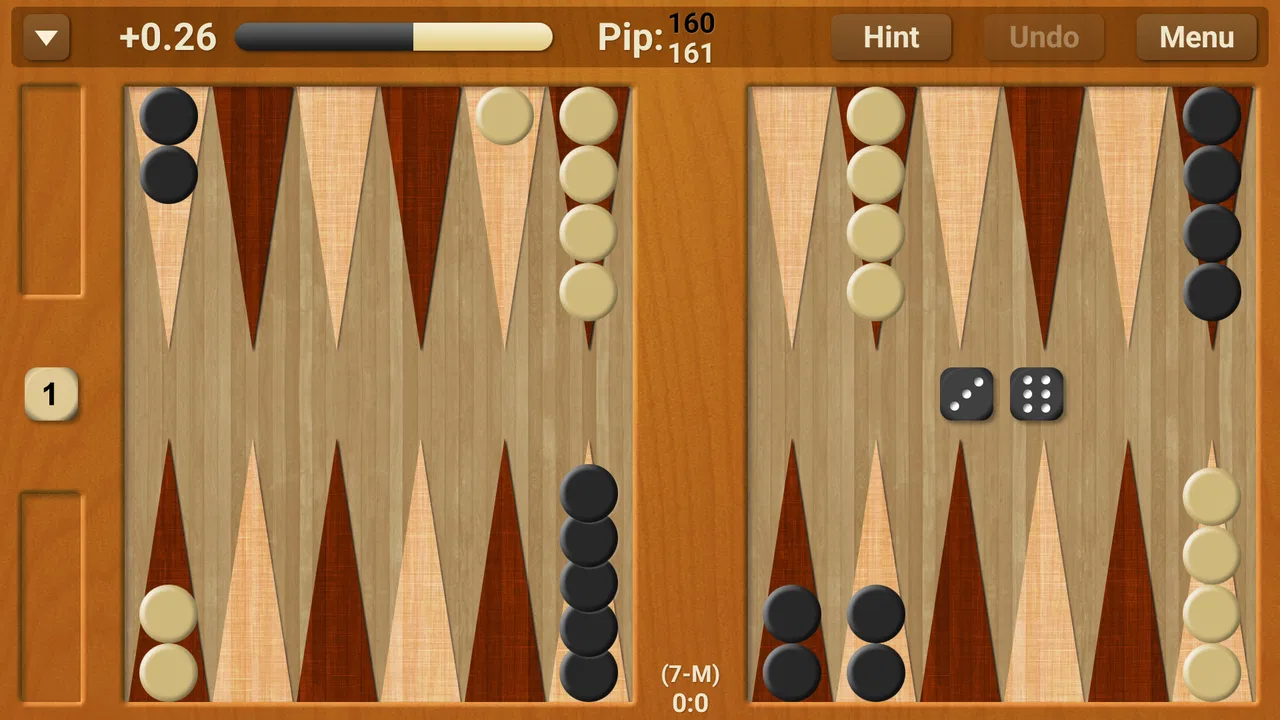
- Clear board design keeps checkers and available moves easy to follow.
- Supports varied match lengths for quick games or longer sessions.
- Helpful statistics let players review results and track performance.
- Offline play works well when you do not have an internet connection.
Cons
- The interface feels dated compared with newer board-game apps.
- Advanced settings may seem confusing to casual backgammon players.
- The AI can feel unforgiving when playing at higher difficulty levels.
- Limited social features reduce interaction with friends and other players.
- Some features may require payment
- depending on the platform version.

Backgammon NJ for Android
Gallery